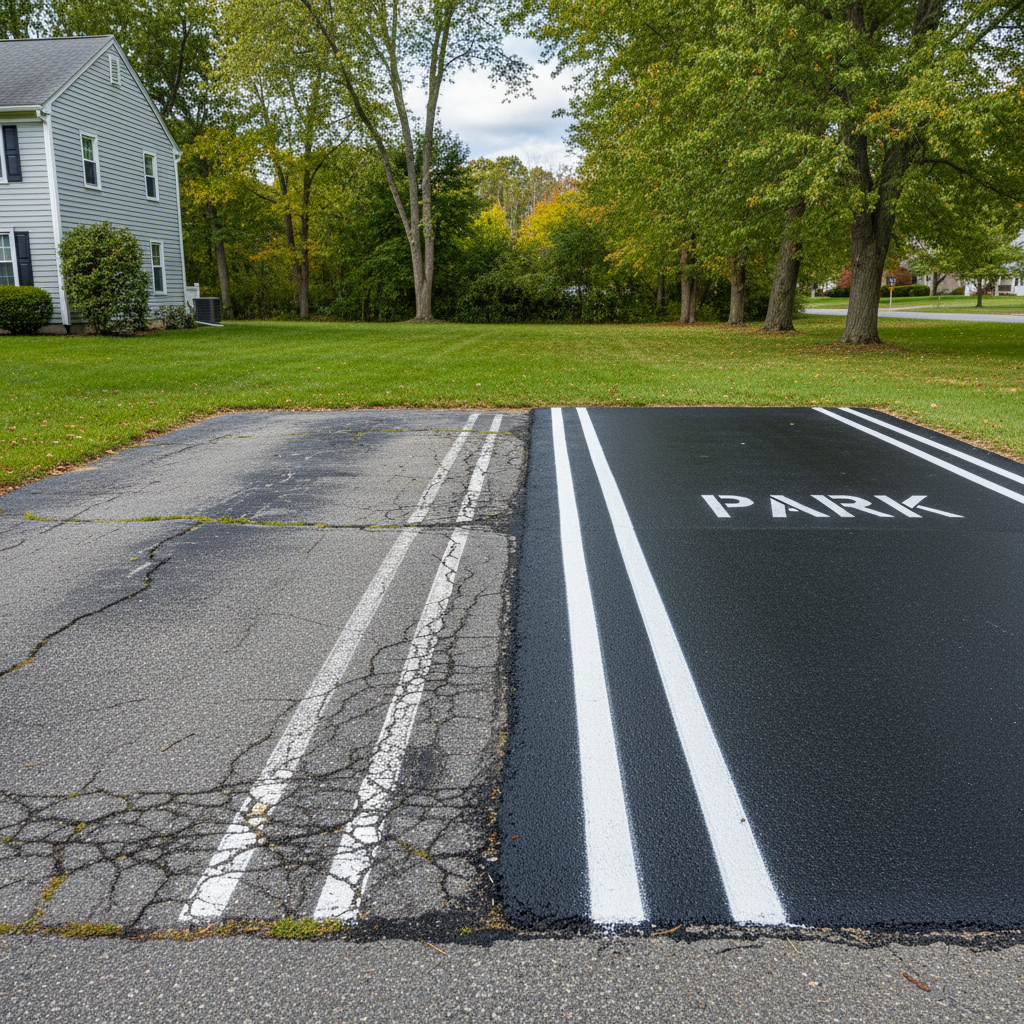
Alright, let's talk driveway stripes. Maybe you just got a fresh sealcoat, or you're tired of your old lines looking faded and sad. You've got options when it comes to marking things out, and for homeowners, it usually boils down to two main approaches: good old paint, or the more modern thermoplastic.
Understanding Your Striping Choices
Most folks think of paint when they think of lines on asphalt, and for good reason. It's been the standard for a long time. Thermoplastic, though, is a bit different. It's a material that gets heated up until it's molten, then we apply it to the pavement where it hardens into a durable, plastic-like marking. Think of it like a really tough, melted-on plastic line.
Cost: What's the Initial Hit?
Let's be upfront: paint is almost always cheaper upfront. You can grab a bucket of traffic paint and a striping machine for a reasonable cost, or hire someone like us at Fortune Asphalt Taunton to come do it for you, and it won't break the bank. It's definitely the budget-friendly option.
Thermoplastic? Yeah, that's going to cost you more to get it put down. The material itself is pricier, and the application needs specialized equipment and a skilled crew. We're talking about heating materials to hundreds of degrees, so it's not something your average DIYer is tackling with a roller from Home Depot. So, if you're just looking for the lowest initial price tag, paint wins, hands down.
Durability: How Long Will It Hold Up?
This is where the rubber meets the road, literally. Paint, especially the kind used for traffic markings, is designed to be tough. But it's still paint, right? It's going to wear down over time from vehicle traffic, UV exposure, and especially our crazy New England weather cycles.
You know how our winters are here in Taunton. The freeze-thaw cycles? They're brutal on everything, including your asphalt and any paint on it. Water gets into tiny cracks, freezes, expands, and pops off bits of paint. Then the plows come through, scraping away at everything. You'll probably get a year or two out of good quality paint before it starts looking pretty faded, maybe three if it's in a low-traffic area and you're lucky. You'll be repainting more often, that's for sure.
Thermoplastic is a different beast entirely. Because it's a thicker, more flexible material that bonds incredibly well to the asphalt, it stands up to abuse much better. It's designed to resist abrasion, chemicals, and those brutal freeze-thaw cycles we get. It doesn't chip and peel like paint. I've seen thermoplastic lines on commercial lots around the East Taunton industrial park that still look good after five, six, even seven years. It just lasts longer, plain and simple.
Maintenance: What's Involved?
With paint, maintenance usually means repainting. When it fades, you paint over it. It's a pretty straightforward process, but it's something you'll need to do regularly if you want those lines to stay crisp. If you're doing it yourself, well, that's your time. If you're hiring someone, it's another bill every couple of years.
Thermoplastic, once it's down, is pretty much set and forget for a long time. You won't be touching it for years. That's the beauty of it. Less hassle, less recurring cost in the long run.
Appearance: What Looks Best?
Both options can look great when they're first applied. Paint gives you a clean, sharp line. Thermoplastic also provides a very crisp, solid line. However, because thermoplastic is thicker, it often has a slightly raised profile, which can give it a more substantial, professional look. It also tends to hold its color better over time, resisting fading much more effectively than paint.
So, initially, they both look good. But over time, the thermoplastic will maintain that fresh, bright appearance much longer than paint will. If you're trying to keep your property looking sharp year after year without constant touch-ups, thermoplastic definitely wins on sustained appearance.
My Recommendation for Taunton Homeowners
Look, I get it. Everyone wants to save a buck. And if you're just marking out a temporary spot or you're selling your house next year and just need something quick and cheap, paint is fine. It serves its purpose.
But if you're planning to stay in your home for a while, and you want lines that are going to stand up to our Taunton weather — the snow, the ice, the salt, the plows, the hot summers — then thermoplastic is absolutely the way to go. The initial cost is higher, yes, but you'll save money and headaches in the long run because you won't be repainting every couple of years. It's a more durable, longer-lasting, and ultimately more cost-effective solution when you factor in the lifespan.
Think of it as an investment. You pay a bit more upfront for quality, and it pays you back with years of trouble-free performance and a consistently sharp-looking driveway. For most homeowners, especially those with busy driveways or who just want to do it right the first time, I'd recommend thermoplastic every time. It's just a better product for our local conditions.